


Steel Wire Decking for Pallet Racks – Safe, Durable, and Easy to Install


Introduction
In modern warehouses, ensuring safety and maximizing storage efficiency are top priorities. Wire mesh decking or wire mesh decking for pallet racks has become an effective solution that enhances rack durability, improves safety for goods and operators, and is easy to install across various warehouse types.
BHD – Palletrack.vn offers practical insights and detailed guidelines on applying wire mesh decking in pallet rack systems, enabling businesses to design smarter warehouses, enhance operations, and optimize costs.
1. What Is Steel Wire Decking for Pallet Racks?
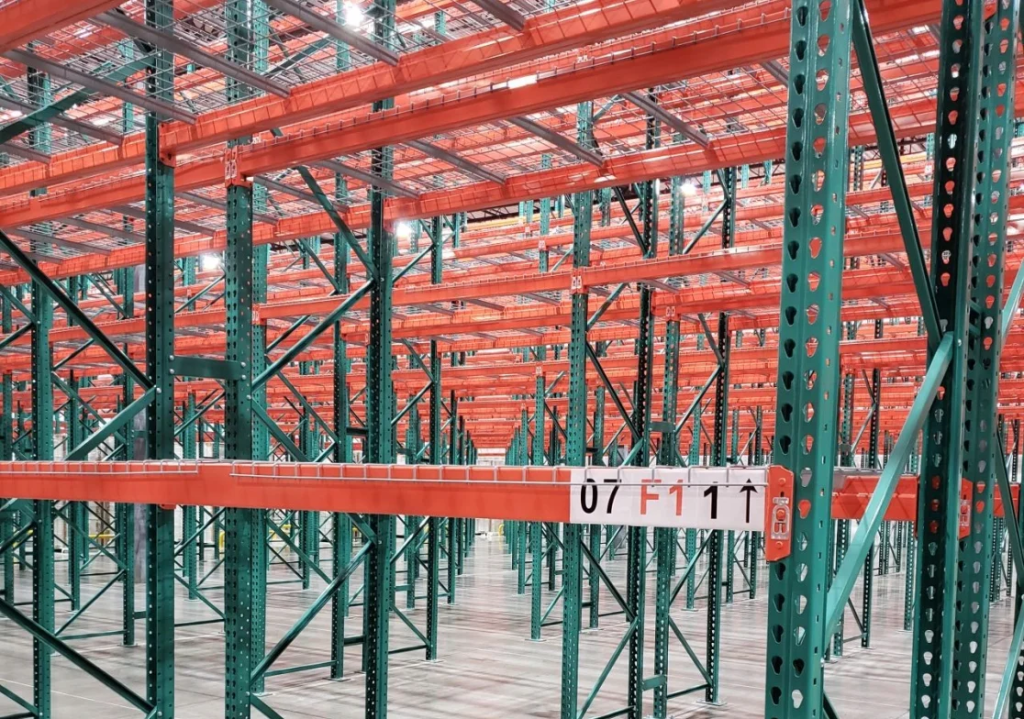
Steel wire decking is a load-bearing mesh panel designed to sit directly on the horizontal beams of a pallet rack, creating a stable and secure surface for pallets or goods. Modern manufacturers offer wire decking in various sizes, load capacities, and mesh patterns to suit different warehouse layouts and pallet types.
Selecting the right type of wire decking during the warehouse design phase helps optimize load capacity, ensure safety, and extend the lifespan of the entire storage system.
High Load Capacity
Steel wire decking is engineered to distribute pallet weight evenly across the beams, preventing point-load stress that can cause beam deflection or damage. With its high load-bearing capability, wire decking supports various types of heavy goods—from industrial components to boxed FMCG products—while maintaining long-term durability for the racking system.
Enhanced Safety in Daily Operations
Using wire decking reduces the risk of pallet slippage, falling goods, and collisions involving operators. Its open-mesh surface provides clear visibility of lower levels, increases friction, and improves overall pallet stability. This is particularly crucial in cold storage, heavy industrial warehouses, or FMCG facilities where fast-paced operations and rack safety are top priorities.
Easy Installation and Relocation
Wire decking is designed to be compatible with most pallet rack beam types, making installation fast and effortless. When expanding the warehouse or rearranging storage zones, the decking can be removed and relocated without disrupting other pallet positions. This flexibility helps businesses reduce installation costs, minimize operational downtime, and support routine rack maintenance.
2. Structure and Types of Steel Wire Deckin
A standard steel wire deck typically consists of:
- Load-bearing steel frame: Provides edge support and increases structural rigidity for the decking panel.
- Steel mesh: Pressed or welded steel mesh that forms a strong load-supporting surface for pallets.
- Accessories: Clips, hooks, or support channels used to secure the wire deck onto pallet rack beams.
Common Types of Pallet Rack Wire Decking
- Welded wire decking: Offers high load capacity and exceptional durability, making it ideal for heavy-duty industrial warehouses.
- Pressed (stamped) wire decking: Lighter and easier to install or remove, suitable for FMCG warehouses or temporary storage setups.
- Wire decking with safety bars: Includes additional support bars for enhanced safety, reducing the risk of pallet slippage or product falling.
3. Operating Principle and Application
Operating Principle
Steel wire decking for pallet racks operates on the principle of evenly distributing the pallet’s weight across the beams and upright frames. When a pallet is placed on the wire deck, the load is dispersed across the entire mesh surface rather than concentrated at a single point.
This minimizes beam deflection, bending, or breakage while improving the overall durability and lifespan of the racking system. The deck also stabilizes pallets during loading and unloading, reducing the risk of slippage or collision with adjacent pallets—an essential factor for warehouse safety.
Uniform-Load Warehouses – Practical Application
Steel wire decking is highly suitable for warehouses storing pallets with similar weights. Thanks to its strong load-bearing capability and even force distribution, businesses can optimize rack capacity, reduce the number of rack rows needed, and maximize storage density.
This makes wire decking an ideal solution for FMCG warehouses or production facilities where products are uniform in size and weight.
Cold Storage – Practical Application
In cold storage facilities, wire decking provides an additional advantage—allowing cold air to circulate freely between pallets. This helps maintain stable temperatures for temperature-sensitive goods such as frozen foods, seafood, or dairy products.
The open mesh design also minimizes condensation, creating a safer working environment for warehouse staff.
FMCG Warehouses – Practical Application
For fast-moving consumer goods (FMCG), wire decking enables quick pallet handling, reduces loading and unloading time, and minimizes operational errors. Its easy installation and removal also support warehouse expansion or layout changes without disrupting daily operations.
4. Benefits of Using Wire Decking for Pallet Racks
Enhanced Operational Efficiency
Steel wire decking evenly distributes pallet loads across beams and uprights, allowing operators to move pallets quickly without concerns about beam deflection or deck failure. With pallets sitting securely on the wire deck, loading and unloading become smoother, reducing handling time and increasing overall warehouse productivity.
Space Optimization
Wire decking maximizes vertical storage by converting unused overhead space into practical load-bearing capacity. When combined with pallet racking systems and high-density storage solutions, businesses can store more pallets within the same floor area while reducing the number of aisles—without compromising accessibility or operational safety.
Improved Safety
A key advantage of steel wire decking is its ability to minimize pallet falls, collisions, and product damage. The stable mesh surface helps pallets maintain balance, while the even weight distribution provides an added layer of protection for both goods and warehouse personnel.
Easy Maintenance
Wire decking is removable, allowing staff to replace or repair damaged panels without interrupting the entire racking structure. Routine maintenance becomes simpler, faster, and more cost-effective compared to fixed or solid decking solutions.
5. Safety Standards and Maintenance Guidelines
To ensure effective warehouse rack maintenance, wire mesh decking must comply with the following safety standards:
Design Load Capacity
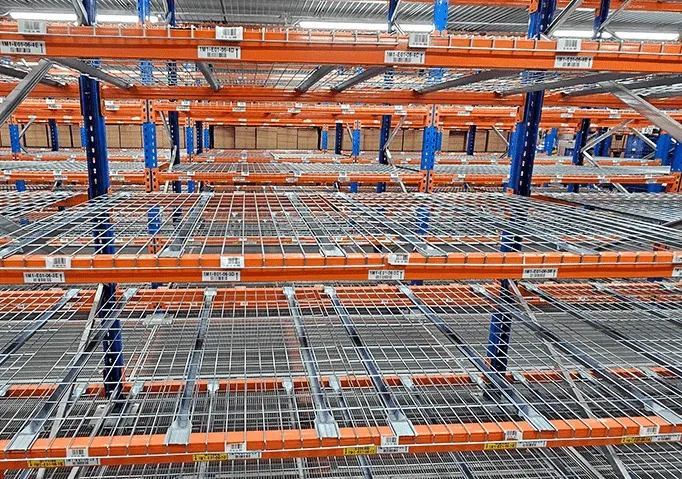
Ensure that wire decking is always used within its specified load limits. Exceeding the rated capacity can lead to deformation, cracking, or even structural collapse, jeopardizing warehouse safety. Clear load capacity labels should be placed on each rack level to help operators identify and follow the correct limits.
Regular Inspections
Conduct routine inspections of welds, bolts, and anti-corrosion coatings to maintain structural integrity and safety. If rust, looseness, or damage is detected, immediate corrective action is necessary to prevent more serious failures. A recommended inspection frequency is every 3–6 months, depending on warehouse usage intensity.
Guardrails and Signage
Install protective guardrails along edges and elevated walkways to prevent falls. Safety signage—such as load limits and restricted areas—helps improve operator awareness and reduces collision risks. Additional lighting and clear color markings further contribute to a safer warehouse environment.
Manufacturer-Certified Inspection
Follow the manufacturer’s maintenance and inspection schedule—typically once every 12 months. Certified inspections ensure all components meet safety standards and maintain load-bearing performance. Inspection reports should be properly documented for monitoring, compliance, and future reference.
6. Wire Mesh Decking and Warehouse Layout Optimization
Using wire mesh decking on pallet racks helps businesses optimize warehouse layout systematically and efficiently:
- Organize inventory by weight or product category.
- Combine with other racking systems, such as selective racks or drive-in racks, to increase storage density.
- Easily adjust the layout when expanding or relocating the warehouse.
Optimizing warehouse layout not only saves floor space but also reduces search time and improves operational efficiency. Additionally, wire mesh decking allows businesses to reconfigure or expand the warehouse layout without dismantling the entire racking system.
This flexibility is especially valuable for warehouses undergoing growth or changes in operational scale. Moreover, a well-organized layout improves forklift traffic flow, reduces collisions, and minimizes travel time when locating or transporting goods.
7. Applications in the Smart Warehouse Trend
Wire mesh decking is an ideal solution for the smart warehouse trend, where businesses aim for:
- Automated operations integrating robots or automated forklifts
- Accurate inventory management with real-time pallet tracking
- Space optimization and reduced labor costs
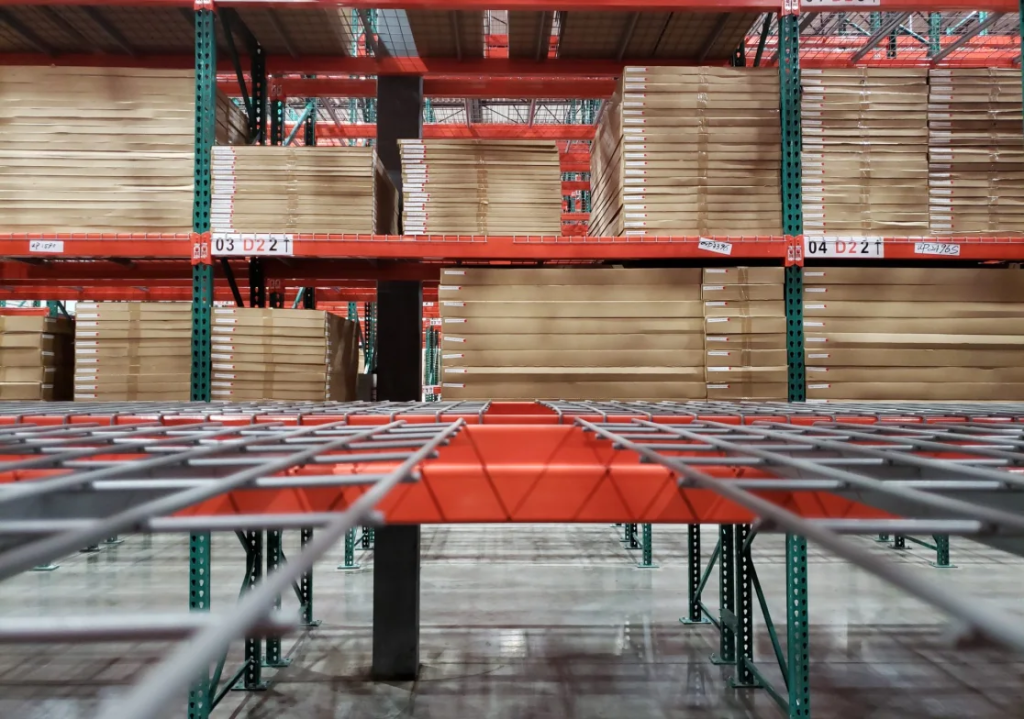
When integrated with warehouse management systems, wire mesh decking enhances productivity, reduces operational errors, and ensures overall safety. Additionally, its open and ventilated structure creates favorable conditions for installing automation devices such as picking robots, conveyors, or temperature sensors.
As a result, the entire warehouse system becomes more flexible, intelligent, and capable of operating efficiently 24/7. This marks a significant step toward the goal of a “fully automated warehouse,” where every activity—from storage and monitoring to inbound and outbound processes—is optimized to reduce operational costs and maximize overall performance.
8. Common Mistakes When Using Wire Mesh Deckin
Some common mistakes when designing warehouse racks with wire mesh decking include:
- Choosing the wrong deck size for the pallet beam spacing
- Failing to verify the maximum load capacity
- Incorrect installation of locking or support accessories, causing vibration or instability
- Skipping regular maintenance checks
These mistakes can lead to pallet damage, reduced rack lifespan, and increased operational risks. Therefore, businesses should choose certified wire mesh decking and ensure proper technical consultation and installation from the beginning to maintain stable, durable, and safe warehouse operations throughout the entire usage period.
9. Modern Storage Trends with Wire Mesh Decking
Wire mesh decking plays a key role in modern storage trends:
- Supports high-density storage while ensuring proper ventilation
- Compatible with dynamic racking systems, enhancing mechanization potential
- Facilitates easy product classification, improving warehouse efficiency
Wire mesh decking not only helps businesses meet modern storage trends but also lays the foundation for the long-term development of warehouse systems. Thanks to its flexibility, high durability, and superior safety, it is a solution that enables warehouses to transform into smart storage models, reduce costs, and optimize operational efficiency.

10. Conclusion
Wire mesh decking for pallet racks is a comprehensive solution that helps businesses increase rack safety and lifespan while optimizing storage space and enhancing warehouse operations. With high adaptability, easy maintenance, and compatibility with smart warehouse trends, wire mesh decking provides long-term value, reduces operating costs, and ensures safety for both goods and personnel.
This represents a sustainable investment, helping businesses move toward modern storage models and professional warehouse management in the future.
Embrace Smart Warehouse Trends!
Discover how Steel Wire Decking supports automation integration, space optimization, and simplifies your inventory management. Contact BHD – Palletrack.vn today!


