


10 Warehouse Rack Safety Rules for Industrial Racking Systems


In modern warehouse operations, rack safety is a critical factor that affects the entire storage, inbound, and outbound processes, cost optimization, and occupational safety. Many businesses suffer losses of hundreds of millions of VND each year due to rack collapses, forklift collisions, defective pallets, or improper stacking procedures. These incidents not only damage assets but also directly threaten workers’ lives, resulting in increased maintenance, insurance, and operational costs.
In warehouse safety, pallet racking systems are the highest-risk component. Even a small error in load capacity, a broken pallet, or a minor forklift collision can cause an entire row of racks to collapse like a domino effect. This is why EN, ANSI, and OSHA standards require companies to implement proper operational procedures and fully train personnel.
As a leading manufacturer and supplier of industrial racks in Vietnam, BHD – Palletrack.vn emphasizes that investing properly in rack safety is the most cost-effective approach.
The following article outlines 10 essential warehouse rack safety rules that every warehouse or factory must adhere to in order to ensure efficient, stable, and maximally safe operations.
Rule 1: Regular Load Inspection & Assessment
Warehouse rack safety starts with knowing both the design load and the actual load. Regular inspections help businesses detect early issues such as bent beams, loosened footplates, twisted rack columns, or cracked welds. According to warehouse safety standards, inspections every 6–12 months are mandatory.
A common mistake many businesses make is relying solely on the rated load on paper while neglecting actual inspections, which can lead to overloading or structural misalignment. If signs of overload or structural deviation are not detected in time (usually not exceeding L/200 for beams), the entire rack row can lose its load-bearing capacity through a chain reaction. This is particularly dangerous in warehouses with continuous forklift use, as even minor impacts from forklifts on weakened rack columns can trigger collapses more easily than usual.
Therefore, businesses should combine regular inspections with a load tracking log, check each rack cell after every shift, and mark warnings at high-risk locations. This approach elevates warehouse rack safety to practical standards rather than relying solely on technical specifications on paper.
Rule 2: Train Forklift Operators According to Procedures
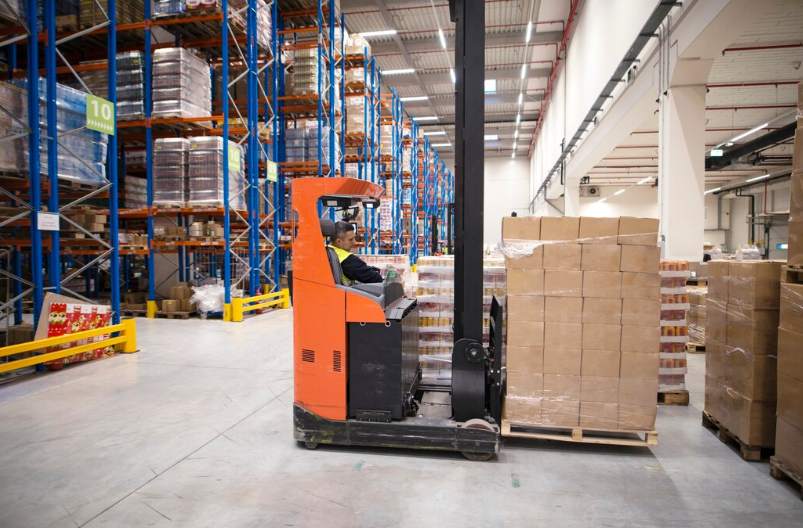
80% of warehouse rack accidents originate from forklifts. Forklifts often collide with rack columns, beams, or pallets, reducing rack lifespan and creating a risk of collapse.
Operators must receive proper training, including:
- Operators must receive proper training, including:
- Lifting and lowering pallets at the correct angles
- Avoid turning too close to racks.
- Parking in designated areas
Forklift training is a critical part of warehouse safety, helping minimize workplace accidents. Beyond basic training, businesses should hold periodic skill assessments to evaluate employees’ ability to handle real-world situations, especially in narrow aisles or high-traffic areas.
Installing convex mirrors, warning sensors, and traffic signs in the warehouse also significantly reduces collisions. By combining all these measures, businesses not only improve operational quality but also strengthen long-term rack safety, ensuring the system is not gradually weakened by repeated forklift impacts over time.
Rule 3: Do Not Exceed the Allowed Load Capacity
This is a critical rule for warehouse rack safety. Each beam has a specified load capacity, yet many businesses still overload racks or use incorrectly sized pallets, causing uneven weight distribution.
Signs of overloaded racks:
- Beams sagging at the center
- Rack columns wobbling when forklifts move
- Pallets protruding or misaligned on the beam.
Exceeding load limits can reduce rack lifespan by 60–70% and create a risk of chain-reaction collapses. Frequent overloading causes steel structures to experience “material fatigue,” gradually weakening their load-bearing capacity even if visible damage has not yet appeared.
This is particularly dangerous because the rack may appear normal while stability has already been compromised. Businesses should implement load labels, control the maximum number of pallet layers, and enforce pallet inspection before placing them on steel or aluminum racks.
These steps are crucial for ensuring warehouse rack safety, preventing repeated overloading, and minimizing the risk of a chain-reaction collapse.
Rule 4: Reinforce and Anchor Racks Properly
A warehouse racking system must be anchored to the floor using footplates, expansion bolts, or chemical anchors to ensure safety. If installation is not up to standard, impacts from forklifts or uneven loads can destabilize the racks.
In warehouse safety standards, floor flatness is also critical. A deviation of 1–3 mm can cause racks to tilt and increase the risk of collapse. In addition to proper anchoring, businesses should periodically inspect bolts, especially in warehouses with high forklift traffic.
Expansion bolts may loosen over time due to vibrations, while chemical anchors may lose strength if the concrete floor is damp or cracked. When anchoring points weaken, entire rack rows can shift under lateral forces, compromising system stability during operation.
Therefore, checking floor flatness, measuring rack column tilt, and re-tightening bolts every 3–6 months is not only a technical requirement but also essential for maintaining maximum rack safety and preventing collapses from small, accumulated deviations.
Rule 5: Arrange Aisles and Spacing According to Standards
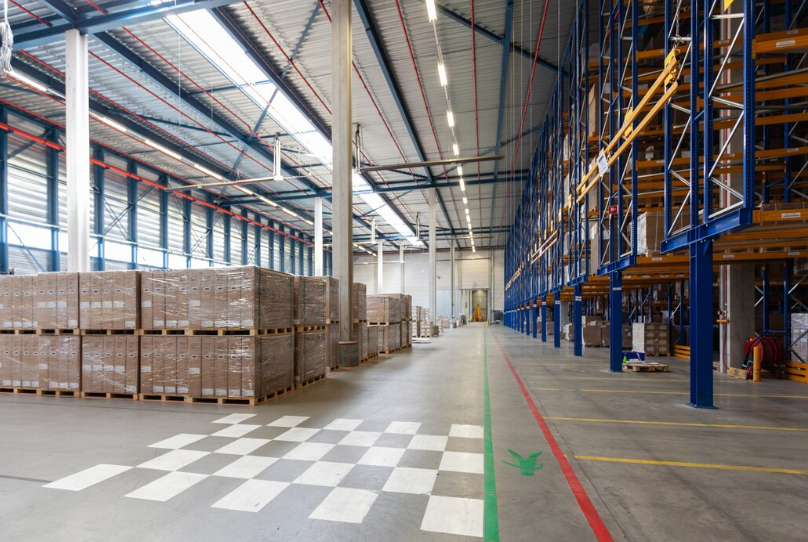
Aisles between rack rows must be wide enough for forklifts. The spacing between beams should match the pallet height. Attempting to “squeeze in” extra levels compromises stability and violates warehouse rack safety principles.
Reference standards:
- Forklift aisle width: 2.5–3.5 m
- Distance between pallet and ceiling: ≥ 30 cm
- Distance between pallet and rack column: ≥ 7.5 cm
If these distances are not maintained, forklifts will have difficulty picking pallets at the correct angle, leading to collisions with beams or columns and gradually weakening the structure. Incorrect spacing can also cause pallets to get stuck during lifting, creating dangerous vibrations at higher levels.
Many warehouses, in an attempt to increase storage capacity, add extra beam levels on their own. This shifts the rack’s center of gravity and violates warehouse safety standards, especially in facilities handling heavy pallets or seasonally varying loads.
Designing the layout correctly from the start and maintaining proper technical spacing is the most effective way to ensure rack safety, allowing forklifts to operate smoothly while minimizing operational risks.
Rule 6: Control Pallet Quality
Broken, warped, rotten, or cracked pallets are a primary cause of rack collapses. When goods are placed on damaged pallets, the weight distribution becomes uneven, overloading certain points of the beams.
Businesses need to remove pallets that are:
- Broken at the legs
- Cracked or weakened
- Missing crossbars
- Warped
This is a crucial process in warehouse safety that many companies often overlook. Without strict pallet quality control, minor defects—such as corner cracks or broken support bars—can quickly develop into serious failures under heavy loads.
In many real cases, racks do not collapse because of weak beams or columns, but because deformed pallets shift loads unevenly, generating torsional forces on the rack system. Checking pallets before each shift and clearly classifying them into usable and discard categories helps maintain optimal rack safety.
This is especially important for warehouses handling heavy goods, cold storage, or frequently reused pallets. For long-term effectiveness, businesses should combine pallet quality control with efficient warehouse design to reduce chain-reaction risks and extend the lifespan of the rack system.
Rule 7: Use Rack Guards and Impact Protection (Rack Protector)
The base of the racking system is the main load‑bearing area. Any collision from a forklift can reduce the rack’s load capacity by up to 40%.
Solutions
- Rack Protectors
- Forklift Barriers
- Guardrails for aisle protection
Installing these simple protective devices can reduce accidents by up to 80%. Adding protection to the rack uprights not only minimizes direct impact from forklifts but also creates a “safety buffer zone” that helps operators navigate better in high‑traffic warehouse environments.
In many recorded incidents, a forklift only needs to deviate by a few centimeters to generate enough impact force to dent the rack upright, causing instability and a sudden reduction in load capacity. By using rack protectors, barriers, or guardrails, the impact force is absorbed and dispersed, instead of transferring directly into the rack structure.
Rule 8: Control Warehouse Environment – Temperature & Humidity
In cold storage, a chilled warehouse
In cold storage, chilled warehouses, or facilities with significant temperature fluctuations, steel can expand and contract, affecting rack stability. High humidity also accelerates the deterioration of wooden pallets, impacting rack safety.
Enterprises should:
- Enterprises should:
- Monitor temperature continuously
- Install ventilation fans
- Keep the warehouse clean and dry
Continuous temperature changes can also affect anchor bolts, welds, and the powder-coated surfaces of racks over time. Rapid steel expansion or contraction can slightly loosen the connections between beams and uprights, creating vibrations that are often imperceptible to the naked eye.
Additionally, high humidity not only degrades wooden pallets but also promotes oxidation on steel surfaces, reducing rack durability and directly impacting warehouse safety. Therefore, companies should combine temperature and humidity sensors, periodic floor cleaning, and maintain stable airflow throughout the warehouse.
Proper environmental management is a crucial aspect of warehouse safety, helping extend rack lifespan and minimize risks caused by environmental factors often overlooked in many storage facilities.
Rule 9: Periodic Maintenance Every 6–12 Months
Rack maintenance is a mandatory activity according to warehouse safety standards. Many enterprises treat racks as “maintenance-free” equipment, leading to reduced lifespan and increased risks.
Maintenance tasks include:
- Checking beam sagging
- Checking beam sagging
- Checking the straightness of uprights
- Inspecting paint coating and rust protection
Periodic maintenance not only helps detect structural weaknesses early but also lays the groundwork for companies to plan system upgrades based on actual operational conditions.
Minor issues such as scratched beams, slightly loose bolts, or lightly peeling powder coating may not pose immediate danger. However, over time, these small defects accumulate, reducing load-bearing capacity and increasing the risk of a full rack collapse.
Maintenance procedures should be carried out by experienced technicians or authorized personnel from the manufacturer to ensure all technical requirements are properly met.
By adhering to the proper maintenance schedule, companies can achieve optimal warehouse rack safety while significantly reducing the cost of major repairs, which typically arise after serious incidents.
Rule 10: Build a Warehouse Safety Culture Within the Enterprise
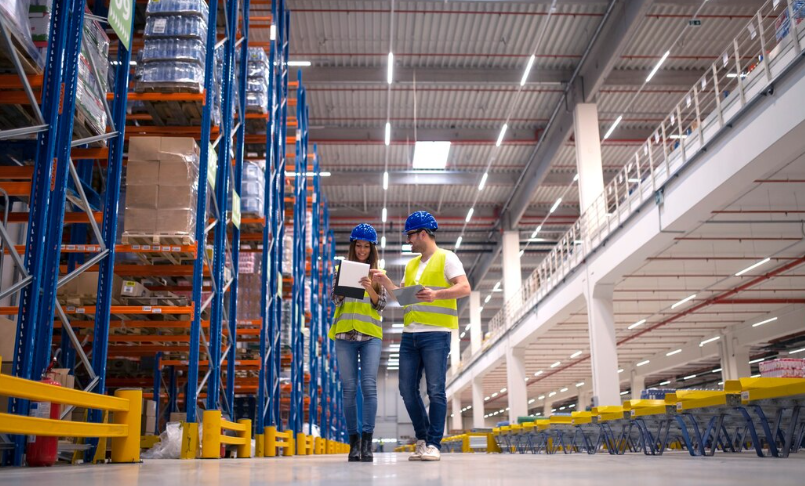
Beyond equipment, human factors account for 50% of warehouse rack safety effectiveness. Companies need to cultivate a compliance culture, from signing safety commitments, posting warning signs, to conducting regular staff training.
A warehouse is only safe when all employees clearly understand:
- Loading and unloading procedures
- Load limits
- Forklift regulations
- How to handle incidents
Building a culture of compliance cannot be done overnight; it requires continuous reinforcement through visual guidance, hands-on training, and periodic supervision.
Companies should organize scenario-based drills, such as handling falling pallets, unstable racks, or forklift malfunctions, so staff understand how to react in real situations. When each individual recognizes that safety is not just a rule but a shared responsibility, risks are significantly reduced and operational efficiency clearly improves.
This forms the foundation for long-term, sustainable warehouse rack safety, minimizing human-error incidents and creating a working environment where every employee can confidently perform their duties.
Classification of Hazard Levels for Common Pallet Rack Failures
| Common Failure | Hazard Level | Indicators / Signs |
| Beam bending | High | Sagging > L/200 |
| Rack column dented | High | Dent > 5 mm |
| Loose anchor bolts | Very High | Racking shakes strongly |
| Broken pallet | High | Cracked or fractured slats |
Benefits of Implementing Pallet Rack Safety in Enterprises
Upgrading pallet rack safety standards brings benefits far beyond the initial investment cost, helping businesses:
Minimize accidents and product damage
When racks are operated according to warehouse safety standards, businesses can nearly eliminate serious incidents such as rack collapse, falling goods, or severe collisions.
Many factories have suffered losses of hundreds of millions of VND from a single accident, especially when storing electronics, pharmaceuticals, mechanical components, or export goods. Such accidents not only damage products but also disrupt production lines.
Extend the lifespan of rack systems
Properly used racks with standard pallets and safe forklift operations can last 10–15 years or more in clean, dry warehouse environments. Conversely, systems that do not comply with warehouse safety principles or standard warehouse layout designs may deteriorate within 5–7 years due to sagging beams, dented rack columns, or loose anchor bolts.
Reduce maintenance and insurance costs
Many businesses are unaware that insurance companies assess warehouse risk based on pallet rack safety compliance and accident history. A warehouse with a well-designed layout, rack protection devices, properly operated forklifts, and regular inspections can benefit from significantly lower property and warehouse insurance premiums.
Additionally, maintenance costs are lower since businesses avoid emergency repairs or replacement of beams and columns caused by accidents.
Optimize loading and unloading productivity
A well-laid-out warehouse with wide aisles and standard pallets allows forklifts to move faster while maintaining safety. Employees spend less time dealing with incidents or cleaning up fallen goods, and inbound–outbound operations flow continuously.
This is an often-overlooked benefit of warehouse safety but directly impacts daily operational efficiency. A clean, organized, and optimized warehouse always provides faster handling speeds, reduces congestion, minimizes collisions, and helps maintain a consistent workflow.
Short Case Study: Rack Collapse Incident
A major logistics company in Southern Vietnam once experienced a rack collapse that caused over 780 million VND in losses. The incident was triggered by a pallet with a broken leg and an excessively sagging beam over time. The accident occurred when a forklift lifted the pallet off-center, destabilizing the entire rack system.
If the enterprise had followed proper pallet rack safety standards, this incident could have been completely avoided.
Conclusion
Warehouse rack safety is not optional—it is a mandatory requirement for every modern warehouse. A safe rack system helps businesses avoid risks, reduce costs, and improve long-term operational efficiency. Adhering to the 10 safety rules outlined above ensures stable warehouse operations, minimizes accidents, and protects assets.
For enterprises seeking professional consultation on rack safety, warehouse layout, or industrial rack production according to load capacity, BHD – Palletrack.vn is ready to partner with you in building an internationally compliant, safe warehouse environment.
Contact BHD – Palletrack.vn for expert consultation and ISO-standard racking solutions!


